Showing posts with label Presentation. Show all posts

Wednesday, June 1, 2016

Blog 24 - Last Presentation Reflection

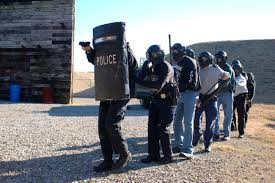
My two mentors the day of my presentation. Tuesday, May 31st, 2016.

(1) Positive Statement

What are you most proud of in your block presentation and/or your senior project? Why?
  • I am proud of several things that happened in my block presentation and in my senior project. I did learn a lot from my senior project and all the research I did as well as the ride alongs. During my block presentation I was able to pull through and not give up. I was very nervous and my friends would try and keep me calm by telling me to relax but in the inside I was freaking out. I thought I was not going to make talking time or I was not going to explain my answers well. At the end of my presentation I felt proud of myself for actually hitting every requirement and talk about my answers to the best of my ability.

(2) Questions to Consider

a. What assessment would you give yourself on your block presentation? Use the component contract to defend that assessment.


AE       P      AP      CR      NC
  • The reason why I would give myself an AE on my block presentation is because I do strongly believe that I hit every requirement in the contract. I had an effective hook, I executed my answers and the foundation fairly well, I made it relatable to today's world by giving specific situations, I effectively used my time. I also dressed for the occasion which in my opinion did catch my audience's attention. I brought my two mentors who assisted in my presentation and were part of the finishing touch to my presentation.

b. What assessment would you give yourself on your overall senior project? Use the component contract to defend that assessment.


AE      P        AP       CR       NC
  • I would give myself an AE on my overall senior project because I manage to overcome the obstacles of repeated information or information that would not relate to my topic. I also had other problems such as the availability of both my mentors so, I had to think of something that would benefit me. My senior project turned out to be a complete success because of all the time and effort I would put towards it. I also spent a lot of time on my Senior Project and tried going on as many ride alongs as I possibly could. The ride alongs benefited me greatly because I did learned a lot from them and I also had unforgettable experiences.

(3) What worked for you in your senior project?
  • What worked from e in my project was that I already knew what my main focus of my senior project was going to be since my Sophomore year in high school. Something else that helped me a lot was the fact that I am part of a Police Explorer program fro the city of Pomona and I have been in that program for some years now. So, getting mentors and going on ride alongs was something I would get approved. I also had the assistance of my teachers if I ever needed it as well as the assistance of several different officers who I would ride with. I am also very passionate about the topic that I picked because it is something I want to do as a career when I graduate from College.
(4) (What didn't work) if you had a time machine, what would you have done differently to improve your senior project?
  • Well, for my senior final presentation I would of had more talking time for both my mentors to use because by the time when I finished with my talking time they had like 7 minutes to talk or answer any questions that my audience would have. I would also read more books that would relate to my topic and help me answer my essential question.
(5)  Finding Value

How has the senior project been helpful to you in your future endeavors? Be specific and use examples.
  • Senior Project taught me a lot that I had questions or concerns about. After completing my final presentation I can truly say I learned a lot from everything that I did and everything that I put myself. I finally understand how several Police Officers deal with their stressful environments and how they think well under pressure. Once again, Law Enforcement is a career I want to pursue in my near future and when I become of age. So, doing all the research, going to mentorship, and interviewing Police Officers taught me a lot and opened my eyes that I still have a long way to go.

Now that I have completed my presentation I can say... I AM GRADUATING!

Wednesday, February 24, 2016

Blog 18 - Answer 2

Experience and Training makes a difference in determining if a Police Officer dies or live on the line of duty 

1. What is your EQ?

  • My essential question is, "How can a Police Officer make safe and ethical calls in high pressure situations?"

2. What is your first answer?
  • My first answer to my essential question is, Training. It takes a lot of training for a Police Officer to be able to make safe and ethical calls in high pressure situations. Continuously training will help any police officer because they will always refer back to muscle memory and what they did or how to perform in certain situations. 
3. What is your second answer?
  • The second answer to my essential question is, experience. It makes a huge difference when it comes to Police officer who has been working for 2-3 years in comparison to a Police Officer who has worked for 10 or more years. The more a Police Officer is exposed to the better because it will better prepare them for anything out of the ordinary and they will know how to react. 
4. List three reasons your answer is true with a real-world application for each.
  • If a Police officer who has worked for 2 years is involved in a shooting he or she may not know how to react to the situation because that is their first encounter to an active shooter. In the other hand, a Police Officer who has worked for 10 years and encounters and active shooter they will know how to better react to the situation due to the exposure they have had in the past and all the out of the ordinary encounters. 
  • Experience may make or break a Police Officer because all Police Officers are human beings and if a newer Police Officer with little experience has to roll up to a high priority call and does not know what to do it will affect them greatly. It also places their life on the line or even other people's life on the line. The main duty of a Police Officer is to protect those in need and help in any situation where the individual feels like they cannot handle it themselves. If a Police Officer were to place others at risk then this may not be the best career for them. 
  • Being a Police Officer takes a lot of courage, motivation and dedication. The process is difficult  and the goal takes time to achieve. For those newer Police Officer (Rookies) who graduated from the Police Academy and are starting their field training which is 6 months; go through so much such as stress under pressure, be able to do their duties, know how to talk on the radio, how to write reports, etc. If that rookie does not pass their 6 months of Field Training then they cannot be a Police Officer because after those 6 months are over they are on their own. A Police officer must be able to think fast as well as act fast and to make sure that all the calls they give are the right ones. one wrong move and their career may come to an end. Trainees are exposed to a lot of information during their field training but eventually understand the ropes.  In the city of Pomona which is known to have high crime rates, a Police Officer must always stay on the look out because in a split second their life can end due to an encounter of shots being fired. Another scenarios that may happen is a when a vehicle is stopped and the license of that vehicle comes back as "Stolen" then that traffic stop would then become as "high risk vehicle stop". So, commands must be given, the people in the vehicle have to come out and must be searched, and the vehicle must be searched; for any guns, weapons, drugs, or anything out of the ordinary like a kidnapped person. 
5. What printed source best supports your answer?
  • Siegel, Robert. "'Be Guardians, Not Warriors': Training A New Generation Of Police." Npr. Npr, 21 May 2015. Web. 09 Sept. 2015. <http://www.npr.org/2015/05/21/408549702/be-guardians-not-warriors-training-a-new-generation-of-police>.
  • <http://www.washingtonpost.com/sf/investigative/2015/06/30/distraught-people-deadly-results/>.
  • Leland, Fred. "Critical Decision Making Under Pressure: The Complete Article." Law Enforcement and Security Consulting. Law Enforcement and Security Consulting, 03 Dec. 2008. Web. 13 Jan. 2016. <http://www.lesc.net/blog/critical-decision-making-under-pressure-complete-article>.
  • Kasper, Jody. "10 Rookie Errors To Avoid." - Article. Police Magazine, 18 May 2013. Web. 05 Feb. 2016. <http://www.policemag.com/channel/careers-training/articles/2010/05/10-rookie-errors-to-avoid.aspx>.
  • Stoughton, Seth. "How Police Training Contributes to Avoidable Deaths." The Atlantic. Atlantic Media Company, 12 Dec. 2014. Web. 09 Feb. 2016. <http://www.theatlantic.com/national/archive/2014/12/police-gun-shooting-training-ferguson/383681/>.
6. What other source supports your answer?
  • Lowery Wesley Lowery, Kimberly Kindy, Keith L. Alexander, Wesley, Kimbrly Kindy, and Keith L. Alexander. "Distraught People, Deadly Results: Fatal Shootings by On-duty Police Officers." Washington Post. The Washington Post, 30 June 2015. Web. 15 Oct. 2015.
  • Vickers, Joan N., and William Lewinski. "Performingunderpressure." Performingunderpressure. Force Science Institute Ltd., n.d. Web. 05 Jan. 2016. <http://www.forcescience.org/performingunderpressure.html>.
  • Davis, Kevin R. "Leadership in Police Special Operations." Law Officer. Pennwell Corporation, 13 Aug. 2015. Web. 08 Sept. 2015. <http://www.lawofficer.com/articles/print/volume-11/issue-7/features/leadership-in-police-special-operations.html>.    
7.  Tie this together with a concluding thought.
  • In Law Enforcement it takes a lot of time and effort to master something or just be good at it. It is critical that one understands what they are getting themselves into because it will place their life on the line as well as others. Police Officers must be able to eliminate the threat at any time and anywhere. They will face several encounters where the situation escalates very fast and it does not give one enough time to think and process what to do or what just happened. Experience and the amount of training that a Police Officer has gone through will make a difference in the field because their chances of survival have just increased. Rather than a new Police Officer who is still learning how to complete several tasks. One must be able to think, act and plan under pressure of what they will be doing and how they are going to control the situation. It can be difficult to think under pressure because one wrong move and everything may go downhill from there. So, Police Officer must always keep in mind that at any moment they can be involved in a high priority call like an active shooter or a foot pursuit. One must expect the unexpected, prepare for the worse and hope for the best. 

On Friday, 2/26 for Advisory, you will be presenting what you have from this blog.  The presentation is more like a share-out and should not last longer than 2 minutes. You don't need a visual, and you should not read what you have written.  

Thursday, February 4, 2016

Lesson 2 Reflection

Train for the worse, hope for the best  

1. What are you most proud of in your Lesson 2 Presentation and why? 
  • I am proud of the content that I had in my power point slides, saying everything and expanding on it, and my activity turning out successful. All the previous mentioned points made me proud because I thought that my presentation was not going to flow like I planned it to be.  But with a few changes here and there, my presentation overall was a success. 
2. A. What assessment would you give yourself on your Lesson 2 Presentation  (self-assessment)? 
  • AE   
B. Explain why you deserve that grade using evidence from Lesson 2 component contract? 
  • I deserve an AE on my Lesson 2 Presentation because I hit every single point hard as well as presented more information that was not necessary but does help an individual understand. I also prepared myself ahead of time to make sure that every single piece of information flowed well in the presentation. I brought in props that would benefit me in my presentation. Every piece of paperwork that I brought it explained them and during my activity I walked around to make sure everybody was doing fine. 
3. What worked for you in your Lesson 2?
  • What worked well for me in my Lesson 2 was that I brought props and had an interesting activity. I showed passion when I was presenting and threw a real life story during my presentation which made it interesting. I also had a friend help me pass out the paper for my activity which has allowed me to discuss the activity. 
4. What didn't work? If you had a time machine, what would you have done differently to improve your Lesson 2?
  • What did not work for me was that before presenting I felt a nervous rush anxiety which made me forget some key parts. But at the end I was able to remember them and talk about them. I also felt that my hook was not good enough so I had to change it at the end which was the night before I presented. 
  •  If I had a time machine to go back and be able to improve on my presentation would be to be part of the first few who present on the first day. I would also have more slides that would go in greater depth about the several different part of training. I would also add a video that relates to my answer. 
5. What do you think your answer #2 is going to be?
  • I believe that my answer two is going to be "experience". I had the time to ask officer my essential question and their answers circled around training and experience as well as keeping ones head clear and always on the end goal (target). 

Friday, November 6, 2015

Blog 11 - Lesson 1 Reflection

There is more to a Law Enforcement Officer than a Badge and a Gun. 

  1. What are you most proud of in your lesson, and why?
    • What I am most proud of in my lesson is that I was able to talk about something that I am very passionate about. I was given the chance to inform an audience how Law Enforcement Officers feel when going on duty and the possible ways they would respond to a certain call for service if they were the first one who arrived at the scene of the crime. I enjoy the field of Law Enforcement due to the need of helping other who can't help themselves and trying to reduce the amount of crimes that occur in a year within a city. 
  2. What assessment would you give yourself on your lesson? Explain why you earned that grade using evidence from the component contract.
    • I would give myself a P because I believe that I presented the information that I gathered from research in a good manner. Basing my grade from the contract I completed everything that is required to do for a "P consideration". I was loud enough for everybody to hear me, I kept constant eye contact with my audience and I kept my audience engaged. I cited two published sources during my presentation as well as the Explorers program which is a stepping stone to getting my mentor, first hand experience, and training. So, overall I did achieve the requirements to receive a grade of a P. 
  3. If you could go back, what would you change about your lesson? How can you use that knowledge to give a better Lesson 2? 
    • If I could go back and redo my lesson 1 I would change the way I presented the information. I would choose a different flow so that my presentation is much more exciting to my audience. I would also talk a bit faster so that I can talk about more things that I did not get the chance to talk about. For lesson 2 because it is much longer I plan to go in greater depth about my Senior Project, Law Enforcement. I will also wear a different uniform with the permission of my Post Adviser. I was given a taste on how to present the knowledge that I have learned, I can better prepare myself for longer presentations and know what to expect when giving one about my Senior Project.